Weld  Axis

How Robotic Welding Positioners Improve Weld Penetration and Consistency

Views : 6
Update time : 2025-12-31 17:52:00


In robotic welding, achieving stable weld penetration and consistent weld quality is essential for modern manufacturing. Robotic Welding Positioners play a critical role by keeping the workpiece in the optimal welding position throughout the process. By controlling orientation and movement, these systems significantly improve weld consistency, reduce defects, and enhance overall productivity.


What Is a Robotic Welding Positioner?
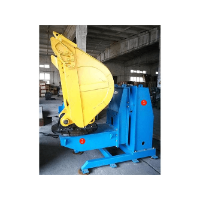

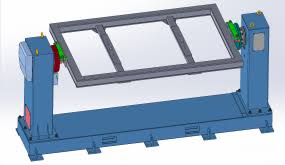
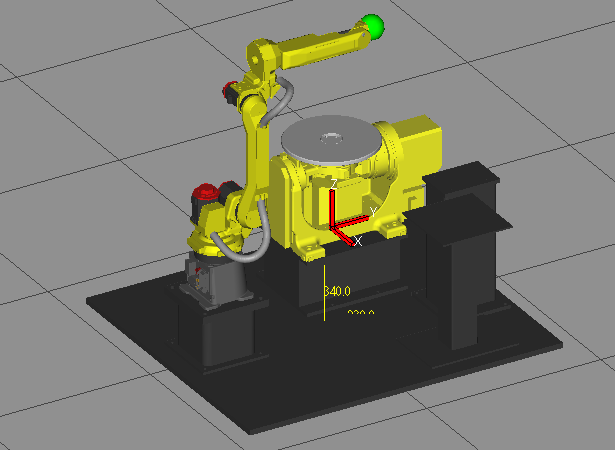
Robotic Welding Positioner is a mechanical device that rotates, tilts, or lifts a workpiece during welding. It works together with an industrial robot to ensure the weld joint remains in the most favorable position.


Key Benefits of Robotic Welding Positioners

Stable and repeatable positioning
• Improved access to complex weld seams
• Reduced manual handling and labor cost
• Better control of weld penetration and weld consistency


How Welding Position Affects Weld Penetration

Weld penetration is highly affected by gravity, heat input, and torch angle. Poor positioning can cause uneven fusion and unstable molten metal flow.


How Robotic Welding Positioners Improve Weld Penetration

By using Robotic Welding Positioners, manufacturers can:
• Keep welds in the flat or optimal position
• Maintain a consistent torch angle
• Ensure stable heat distribution across the joint

This results in deeper, more uniform weld penetration and stronger weld joints.


How Robotic Welding Positioners Improve Weld Consistency

Weld consistency is one of the biggest advantages of robotic welding automation. Positioners ensure every part follows the same programmed movement, regardless of production volume.


Key Factors That Improve Weld Consistency

• Precise and repeatable motion control
• Reduced human error
• Synchronized movement with the welding robot
• Stable and accurate workpiece alignment

This leads to fewer defects, less rework, and predictable welding quality.


Reduced Spatter and Welding Defects

Incorrect positioning often leads to spatter, undercut, and incomplete fusion. Robotic Welding Positioners help stabilize the weld pool and arc length, minimizing these problems.


Quality Improvements Achieved

• Cleaner weld appearance
• Lower spatter levels
• Reduced porosity and undercut
• Improved mechanical strength and durability


Industries That Benefit from Robotic Welding Positioners

Robotic Welding Positioners are widely used in industries that require high precision and repeatability, including:


Typical Application Areas

• Automotive and auto parts manufacturing
• Structural steel fabrication
• Heavy equipment and machinery
• Metal frames, enclosures, and components


Choosing the Right Robotic Welding Positioner
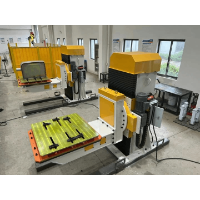
Selecting the right Robotic Welding Positioner depends on the size, weight, and complexity of the workpiece.


Key Selection Factors

• Load capacity and stability
• Axis configuration (single-axis or multi-axis)
• Rotation speed and positioning accuracy
• Compatibility with robotic welding systems


Conclusion

By maintaining optimal welding positions, Robotic Welding Positioners significantly improve both weld penetration and weld consistency. They help manufacturers achieve higher-quality welds, reduce defects, and increase production efficiency.

Investing in the right robotic welding positioner is a practical step toward reliable and scalable welding automation.

Contact us to learn how our Robotic Welding Positioners can optimize your robotic welding system.


相关新闻
How Robotic Welding Positioners Improve Weld Penetration and Consistency How Robotic Welding Positioners Improve Weld Penetration and Consistency
Dec 31,2025
The article introduces the definition, core advantages, applicable industries, and key selection factors of robotic welding positioners, emphasizing their practical value for welding automation.
1-Axis vs. 3-Axis Positioners: Which One Does Your Welding Cell Need? 1-Axis vs. 3-Axis Positioners: Which One Does Your Welding Cell Need?
Dec 29,2025
Robotic welding cells rely on the right positioner configuration to achieve stable, efficient, and high-quality welding results. This article compares 1-axis and 3-axis welding positioners, explaining their motion capabilities, application scenarios, and key differences to help manufacturers select the most suitable solution for their welding automation needs.
Extending the Work Envelope: How Linear Tracks Boost Productivity in Large-Scale Fabrication Extending the Work Envelope: How Linear Tracks Boost Productivity in Large-Scale Fabrication
Dec 26,2025
Robot linear tracks play a critical role in extending the work envelope of industrial robots used in large-scale fabrication. By enabling robots to travel along a linear axis, these systems significantly improve coverage, reduce repositioning time, and enhance overall production efficiency. In applications such as robotic welding, steel structure fabrication, and heavy equipment manufacturing, linear tracks allow a single robot to handle oversized workpieces with greater flexibility and consistency, making them an essential solution for scalable automation systems.
Precision at Scale: A Guide to Long-Stroke Robot Linear Tracks Precision at Scale: A Guide to Long-Stroke Robot Linear Tracks
Dec 25,2025
Long-stroke robot linear tracks extend robot reach while maintaining positioning accuracy, enabling efficient automation of large-scale manufacturing processes. This guide explains how long-stroke linear tracks support synchronized motion, flexible cell layouts, and stable performance in applications such as robotic welding and heavy fabrication, helping manufacturers achieve precision at scale.