Introduction
In large-scale fabrication environments, manufacturers increasingly face challenges related to limited robot reach, oversized workpieces, and inefficient cell layouts. Fixed-base industrial robots often struggle to cover long weld seams or large assemblies without frequent repositioning, which directly impacts productivity and consistency.
By integrating robot linear tracks, manufacturers can significantly extend the robot work envelope, enabling more efficient automation for welding, cutting, and heavy fabrication applications.
What Are Robot Linear Tracks?
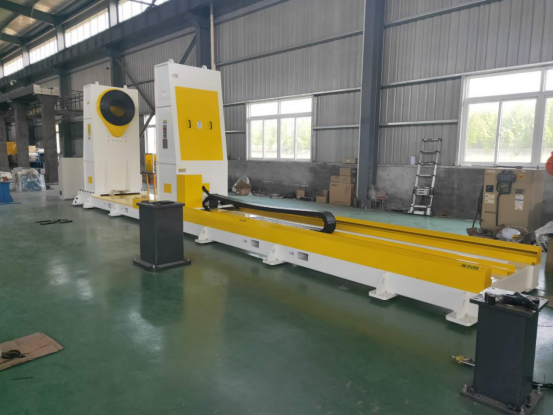
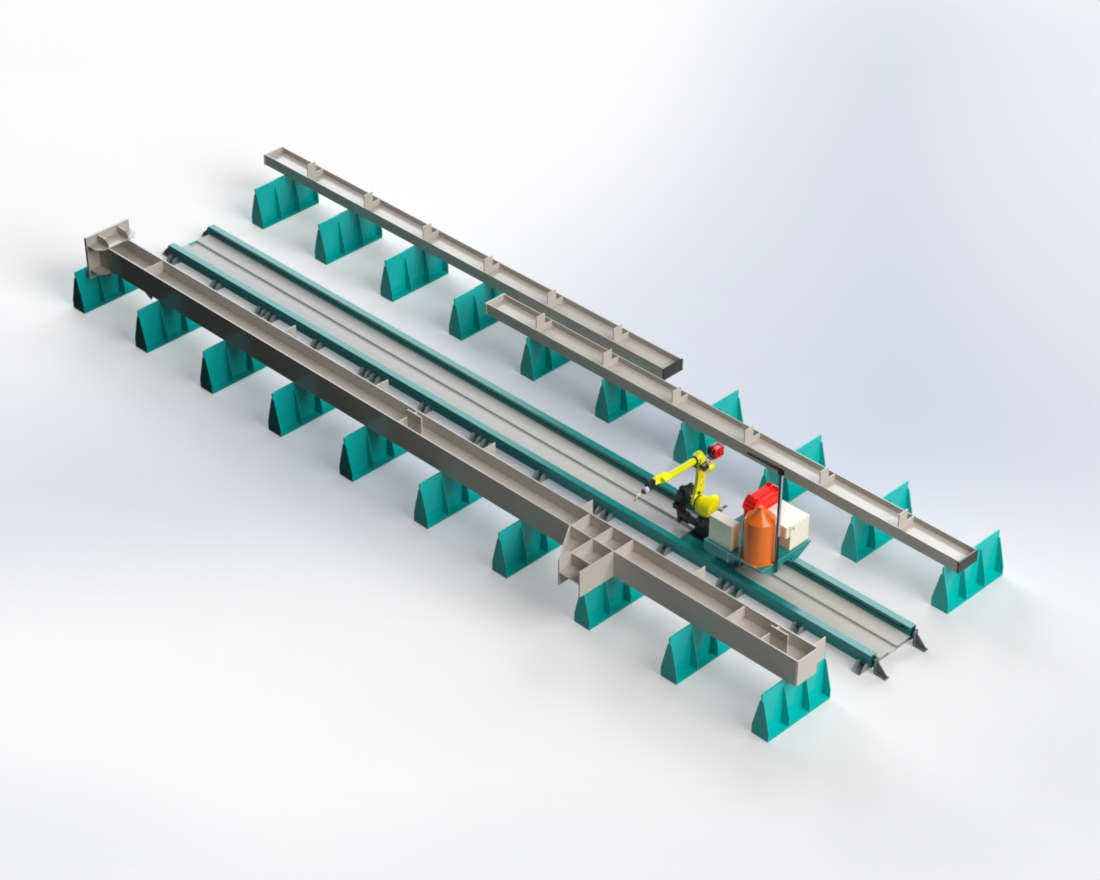
A robot linear track, also known as a robot travel rail or external linear axis, is a servo-driven system that allows an industrial robot to move along a straight path. Acting as an additional axis, the linear track enables the robot to access a much larger working area than a fixed installation.
These systems are widely used in robotic welding automation, steel structure fabrication, and heavy manufacturing environments where flexibility and scalability are critical.
How Linear Tracks Extend the Work Envelope
One of the primary advantages of robot linear tracks is their ability to extend the robot’s working range without increasing the number of robots in a production line. By traveling along a long stroke, a single robot can service multiple stations or handle oversized components efficiently.
This extended work envelope reduces manual handling, minimizes downtime, and simplifies production cell design in large-scale fabrication facilities.
Productivity Benefits in Large-Scale Fabrication
Reduced Repositioning and Cycle Time
With a linear track, robots can move continuously along the workpiece, eliminating frequent stops for repositioning. This results in shorter cycle times and higher throughput.
Improved Welding Consistency
Stable and repeatable linear motion helps maintain consistent welding parameters, improving overall weld quality in automated fabrication lines.
Better Equipment Utilization
Instead of deploying multiple robots, a single robot mounted on a linear track can perform tasks across an extended production area, improving return on investment.
Scalability and Future Expansion
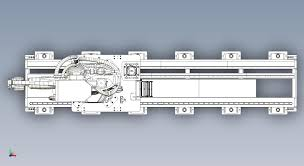
Modern robot linear track systems are designed with modularity in mind. Stroke length, mounting configuration, and load capacity can be customized and expanded as production requirements evolve. This scalability makes linear tracks an ideal solution for manufacturers planning long-term automation growth.
Conclusion
By extending the robot work envelope, robot linear tracks play a vital role in boosting productivity, flexibility, and efficiency in large-scale fabrication environments. They enable manufacturers to handle larger workpieces, streamline automation layouts, and scale production without sacrificing precision or reliability. Contact us to learn how the right robot linear track solution can enhance your fabrication automation system.
 Reducing Cycle Times: The Role of Headstock-Tailstock Positioners in Automation
 How Robotic Welding Positioners Improve Weld Penetration and Consistency
 1-Axis vs. 3-Axis Positioners: Which One Does Your Welding Cell Need?
 Extending the Work Envelope: How Linear Tracks Boost Productivity in Large-Scale Fabrication
