
About Us
Case Study: Successful Implementation of Robotic Positioners in Automotive Manufacturing
Views : 7
Update time : 2025-12-17 18:15:00
Introduction
The automotive manufacturing industry relies heavily on automation to achieve high productivity, consistent quality, and cost efficiency. As vehicle designs become more complex and production volumes increase, manufacturers are increasingly adopting robotic positioners to support flexible and precise robotic welding operations.
This case study highlights how a robotic welding positioner system was successfully implemented in an automotive production line, addressing common challenges such as precision control, cycle time optimization, and system integration.
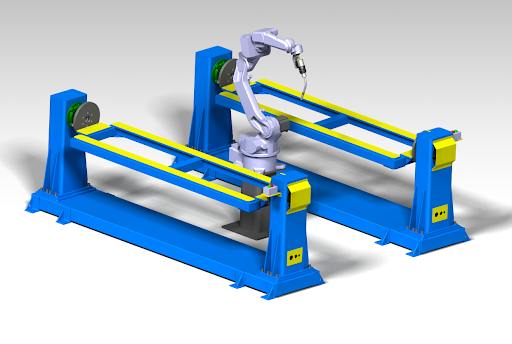
Project Background
The customer is a Tier 1 automotive parts manufacturer specializing in structural components and chassis assemblies. The production line required a welding automation solution capable of handling large and heavy workpieces while maintaining tight dimensional tolerances and high throughput.
Key requirements included high positioning accuracy, stable multi-shift operation, seamless robot integration, and improved welding consistency.
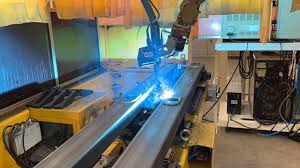
Challenges Before Implementation
Limited Positioning Accuracy
Manual and semi-automated fixtures made it difficult to maintain consistent welding positions, resulting in unstable weld quality.
Long Cycle Times
Frequent repositioning and manual handling increased cycle time and limited overall production capacity.
Inconsistent Weld Quality
Variations in part positioning led to weld defects and rework, increasing manufacturing costs.
Robotic Positioner Solution
To address these challenges, a servo-driven robotic welding positioner was integrated into the production line as a synchronized external axis. This allowed coordinated motion between the robot and the workpiece during the welding process.
Key features of the solution included:
High-precision servo control for accurate positioning
Rigid mechanical structure for stable operation
Coordinated motion with the robot controller
Modular design for future expansion
Implementation Process
1. Process Analysis
Welding sequences, workpiece dimensions, and load conditions were evaluated to determine the optimal positioner configuration.2. System Integration
The robotic positioner was configured as an external axis and synchronized with the robot controller.3. Installation and Commissioning
On-site installation and motion tuning ensured stable operation and accurate positioning.4. Operator Training
Operators received training to ensure efficient daily operation and basic maintenance.
Results and Performance Improvements
After implementation, the manufacturer achieved measurable improvements:
Improved welding accuracy and repeatability
Reduced production cycle time
Increased production stability during continuous operation
Lower rework and maintenance costs
Why Robotic Positioners Matter in Automotive Manufacturing
Automotive production demands high precision, repeatability, and scalability. Robotic welding positioners enable manufacturers to optimize robot access, maintain consistent welding orientation, and build flexible automation cells that can adapt to future production requirements.
Conclusion
This case study demonstrates how a robotic positioner system can significantly enhance welding automation performance in automotive manufacturing. Through precise motion control, reliable system integration, and scalable system design, robotic positioners help manufacturers achieve long-term productivity gains and consistent weld quality.
Contact us today to discuss your automotive welding automation requirements and find the right robotic positioner solution for your application.

相关新闻
 Case Study: Successful Implementation of Robotic Positioners in Automotive Manufacturing
Dec 17,2025
This case study explores how robotic positioners were successfully implemented in an automotive welding production line, improving positioning accuracy, reducing cycle time, and enhancing overall production stability.
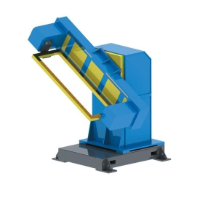 Future Trends in Robotic Positioners and Automation Systems
Dec 16,2025
Robotic positioners are a key part of modern automation systems, enabling higher precision, flexibility, and efficiency in welding and fabrication processes. This article explores future trends in robotic welding positioner systems, including deeper robot integration, higher accuracy and repeatability, modular and scalable designs, digital monitoring technologies, and enhanced safety requirements, helping manufacturers plan reliable and future-ready automation solutions.
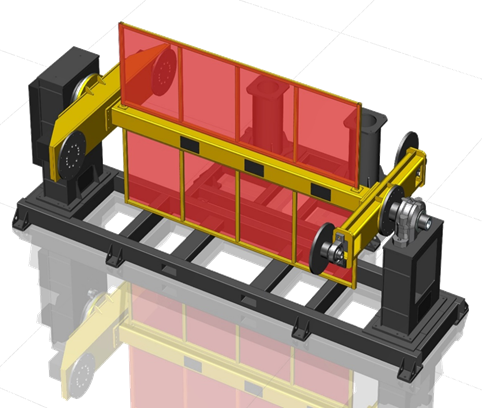 Common Challenges in Implementing Robotic Positioners and How to Overcome Them
Dec 15,2025
Robotic positioners are essential in robotic welding automation, improving weld quality, positioning accuracy, and production efficiency. This article outlines common challenges in implementing robotic welding positioner systems and explains how proper planning, precise payload selection, and reliable system integration help manufacturers achieve stable, scalable automation with consistent welding performance.
 Integrating Robotic Positioners and Gantry Systems for Optimal Automation
Dec 12,2025
In Industry 4.0, robotic positioners-gantry integration delivers precision, efficiency, and scalability for manufacturers. With strong reach and load-bearing capacity, it solves key pain points across automotive, aerospace, electronics—offering flexibility, sub-millimeter accuracy, 30% faster cycle times, and 1-3 year ROI. AI/digital twins boost future value.
