The Top 5 Benefits of Integrating Robotic Transfer Units (RTU) in Heavy Manufacturing
Introduction
As heavy manufacturing industries continue to adopt advanced automation technologies, efficiency, stability, and scalability have become critical performance indicators. Robotic Transfer Units (RTU) play an increasingly important role in material handling and welding automation systems integrated with Robot Linear Track solutions, enabling precise, repeatable, and synchronized movement of heavy components across large production areas.
This article outlines the top five benefits of integrating RTU systems in heavy manufacturing environments and explains why they have become key components in modern industrial automation.
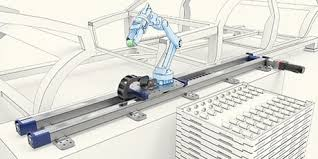
1. Improved Material Handling Efficiency
One of the primary advantages of Robotic Transfer Units is their ability to automate the transfer of heavy workpieces between workstations. RTUs reduce reliance on manual handling, cranes, or forklifts, enabling faster and more consistent material flow throughout the production line.
By integrating RTUs into automated manufacturing systems, manufacturers can significantly reduce idle time between processes and improve overall production throughput.
2. Enhanced Precision and Repeatability
Heavy manufacturing applications often require accurate and repeatable positioning of large and heavy components. RTU systems are designed with rigid mechanical structures and servo-driven motion control, ensuring stable movement even under high payload conditions.
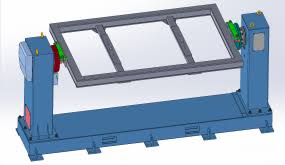
This level of precision is especially critical in robotic welding automation, particularly when RTUs operate alongside Robot Welding Positioner systems to ensure consistent workpiece orientation and reliable weld quality.
3. Increased Production Flexibility
RTUs allow manufacturers to design flexible production layouts that can adapt to different product sizes, weights, and process requirements. Travel length, load capacity, and system configuration can be customized to meet specific application needs.
As production volumes change or product designs evolve, Robotic Transfer Units can be expanded or reconfigured without major modifications to the overall automation system, supporting long-term operational flexibility.
4. Reduced Labor and Improved Workplace Safety
By automating the movement of heavy materials, RTU systems significantly reduce the need for manual handling. This lowers the risk of workplace injuries and improves overall safety conditions on the factory floor.
Automated transfer systems also reduce operator exposure to repetitive and physically demanding tasks, allowing personnel to focus on system supervision, quality control, and process optimization.
5. Scalable Automation for Long-Term Growth
Scalability is a key requirement in heavy manufacturing environments. Robotic Transfer Units support modular automation concepts, enabling manufacturers to start with a basic configuration and expand the system as production demands increase.
RTU-based automation systems are often integrated with Robot Linear Track and Robot Welding Positioner solutions to support scalable and flexible production layouts without requiring a complete line redesign.

Applications of RTU Systems in Heavy Manufacturing
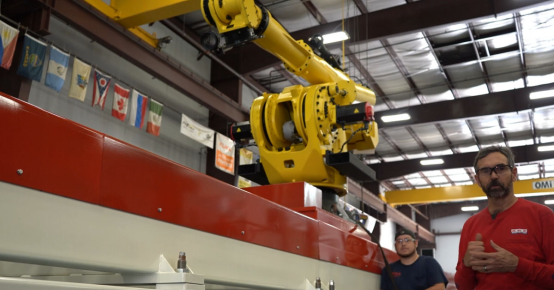
RTUs are widely used in heavy robotic welding production lines supported by Robot Gantry System and Robot Linear Track solutions, as well as in:
- Automotive body and chassis manufacturing
- Large structural fabrication
- Automated assembly and material handling systems
In these applications, RTUs provide reliable motion control and synchronized operation with industrial robots.
Conclusion
Integrating Robotic Transfer Units (RTU) in heavy manufacturing delivers clear advantages in efficiency, precision, safety, and scalability. By automating heavy material transfer and enabling flexible system layouts, RTUs help manufacturers build reliable, future-ready automation systems.
When combined with complementary automation components such as Robot Linear Track, Robot Welding Positioner, and Robot Gantry System, RTU-based solutions offer a practical and scalable approach to modern industrial automation.
 Reducing Cycle Times: The Role of Headstock-Tailstock Positioners in Automation
 How Robotic Welding Positioners Improve Weld Penetration and Consistency
 1-Axis vs. 3-Axis Positioners: Which One Does Your Welding Cell Need?
 Extending the Work Envelope: How Linear Tracks Boost Productivity in Large-Scale Fabrication
