
About Us
Maintenance Tips for Extending the Lifespan of Your Robotic Positioners
Views : 410
Update time : 2025-12-18 14:36:00
Introduction
Robotic positioners play a critical role in automated welding and manufacturing systems by ensuring accurate workpiece positioning and stable, coordinated motion. As key components operating under continuous load and repetitive motion, robotic welding positioners require proper maintenance to deliver long-term performance and reliability.
Effective maintenance not only extends the lifespan of robotic positioner systems but also reduces unplanned downtime, improves welding consistency, and lowers overall operating costs. This article outlines practical maintenance tips to help manufacturers keep their robotic positioners operating at peak performance.

1. Perform Regular Mechanical Inspections
Routine mechanical inspections are essential for identifying early signs of wear or misalignment in robotic positioners. Key components such as bearings, gears, shafts, and mounting bolts should be checked on a scheduled basis.
Look for abnormal noise, vibration, or backlash during operation, as these can indicate mechanical wear or loose connections in robotic welding positioners. Early detection helps prevent minor issues from developing into major failures.
2. Maintain Proper Lubrication
Lubrication plays a vital role in reducing friction and wear in robotic positioner systems. Gearboxes, bearings, and rotating joints must be lubricated according to the manufacturer’s specifications.
Ensure that the correct lubricant type and quantity are used, and verify that automatic lubrication systems are functioning properly. Inadequate lubrication can significantly shorten the service life of robotic positioners.
3. Monitor Load and Payload Conditions
Operating a robotic positioner beyond its rated payload or with an unbalanced load increases mechanical stress and accelerates wear. Regularly review payload data, center-of-gravity positioning, and fixture weight to ensure they remain within design limits.
Proper load management improves motion stability, protects drive components, and extends the lifespan of robotic welding positioners.
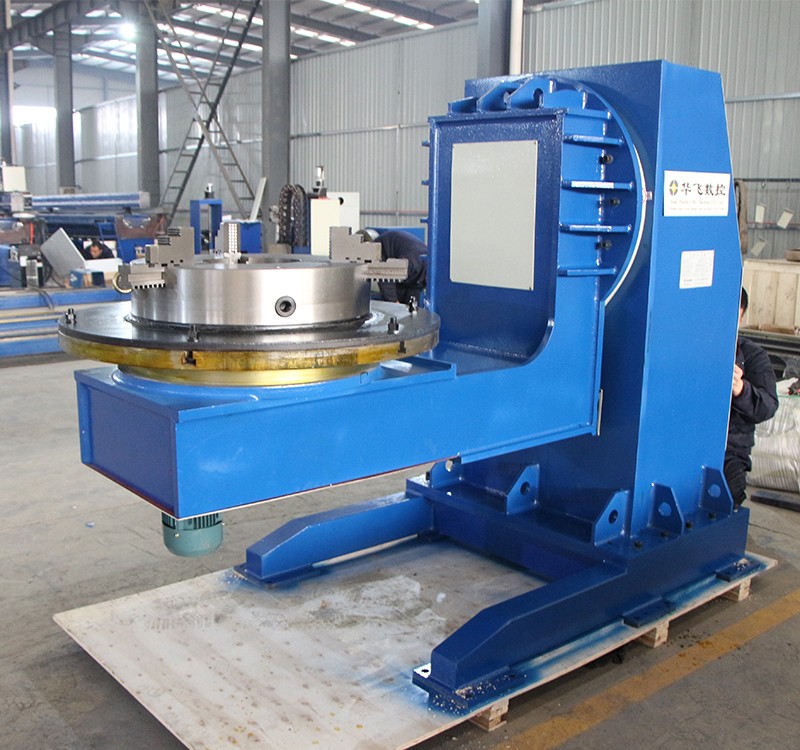
4. Check Servo and Drive System Performance
Servo motors, drives, and encoders are critical to the positioning accuracy of robotic positioner systems. Periodically inspect cables, connectors, and feedback signals for signs of wear or damage.
Monitoring servo performance helps maintain precise motion control and prevents positioning errors that can affect welding quality and the reliability of robotic positioners.
5. Keep the Positioner Clean and Protected
Dust, welding spatter, and metal particles can accumulate on robotic positioners, leading to premature wear or component failure. Protective covers, seals, and enclosures should be inspected regularly.
Cleaning exposed surfaces and guide areas helps protect robotic welding positioners, especially in harsh welding environments.
6. Verify Calibration and Repeatability
Over time, mechanical wear and operational stress can affect the positioning accuracy of robotic positioner systems. Periodic calibration checks help ensure consistent repeatability and alignment with the robot.
Maintaining proper calibration is essential for achieving stable welding performance with robotic positioners.
7. Train Operators and Maintenance Personnel
Well-trained operators are more likely to identify abnormal behavior early and operate robotic positioners within their designed limits. Maintenance personnel should understand inspection procedures, lubrication schedules, and basic troubleshooting techniques.
Proper training reduces misuse and contributes to longer service life of robotic welding positioners.
8. Follow a Preventive Maintenance Schedule
Establishing a preventive maintenance plan is critical for ensuring the long-term reliability of robotic positioner systems. Maintenance activities should be scheduled based on operating hours and application conditions.
Preventive maintenance minimizes unexpected downtime and protects the performance of robotic positioners over time.
Conclusion
Proper maintenance is essential for extending the lifespan of robotic positioners and ensuring stable operation in automated manufacturing environments. By performing regular inspections, maintaining correct lubrication, managing payloads, and monitoring servo performance, manufacturers can protect their automation investment.
A well-maintained robotic welding positioner delivers consistent accuracy, improved reliability, and lower total cost of ownership over its operational lifetime.

Contact us today to learn more about maintaining robotic positioners and building reliable welding automation solutions.
Related News
 Reducing Cycle Times: The Role of Headstock-Tailstock Positioners in Automation
Jan 04,2026
Headstock-tailstock positioners are essential for automated welding applications involving long and heavy workpieces. By providing stable dual-end support and smooth, controlled rotation, these systems help reduce cycle time, improve welding consistency, and enhance overall efficiency in robotic welding cells.
 How Robotic Welding Positioners Improve Weld Penetration and Consistency
Dec 31,2025
The article introduces the definition, core advantages, applicable industries, and key selection factors of robotic welding positioners, emphasizing their practical value for welding automation.
 1-Axis vs. 3-Axis Positioners: Which One Does Your Welding Cell Need?
Dec 29,2025
Robotic welding cells rely on the right positioner configuration to achieve stable, efficient, and high-quality welding results. This article compares 1-axis and 3-axis welding positioners, explaining their motion capabilities, application scenarios, and key differences to help manufacturers select the most suitable solution for their welding automation needs.
 Extending the Work Envelope: How Linear Tracks Boost Productivity in Large-Scale Fabrication
Dec 26,2025
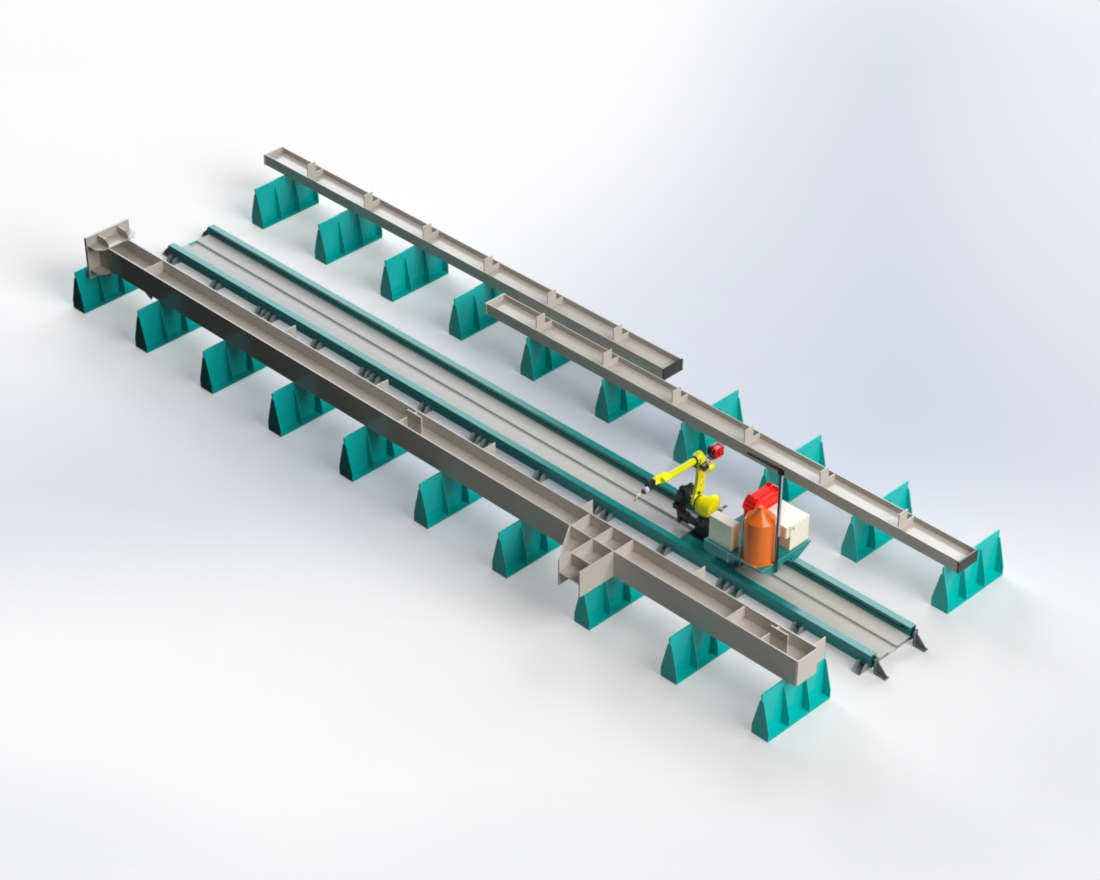
Robot linear tracks play a critical role in extending the work envelope of industrial robots used in large-scale fabrication. By enabling robots to travel along a linear axis, these systems significantly improve coverage, reduce repositioning time, and enhance overall production efficiency. In applications such as robotic welding, steel structure fabrication, and heavy equipment manufacturing, linear tracks allow a single robot to handle oversized workpieces with greater flexibility and consistency, making them an essential solution for scalable automation systems.
